Itinerary:
Aviation, Innovation, Financial Services
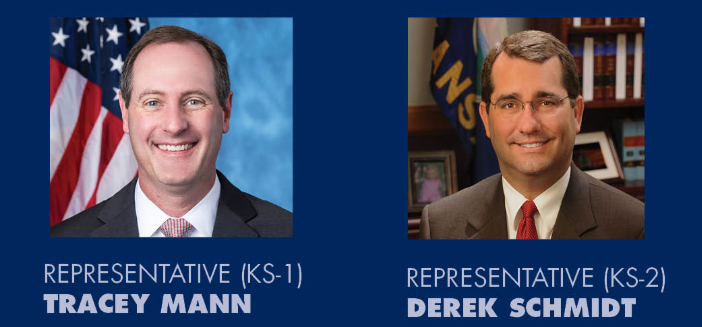
Rep. Tracey Mann
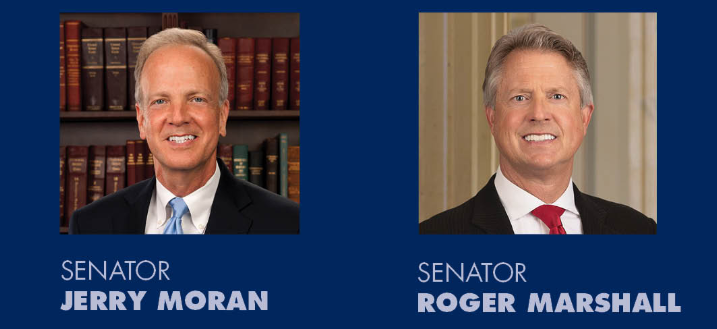
Sen. Jerry Moran
Sen. Roger Marshall
Attire
Business Professional attire is recommended for daytime. Ties are optional.
Business casual attire is recommended for dinner.
Please wear comfortable shoes as we will be walking extensively.
Elected Officials
“Let us develop the resources of our land, call forth its powers, build up its institutions, promote all its great interests, and see whether we also, in our day and generation, may not perform something worthy to be remembered.”
Daniel Webster, June 17, 1825, Speech Commemorating the 50th Anniversary of the Battle of Bunker Hill, Charlestown, Massachusetts
WELCOME TO THE 2025 GREATER TOPEKA CHAMBER DC FLY-IN
On behalf of the Greater Topeka Chamber of Commerce, welcome to the 2025 DC Fly-In, taking place September 7–9. We are thrilled to have you join us in our nation’s capital as we work together to elevate Topeka’s voice in Washington. This year’s event is proudly sponsored by Bartlett & West, InTrust Bank, and Schwerdt Design Group (SDG) — we thank them for their steadfast support of our community and advocacy efforts.
The DC Fly-In is a powerful opportunity to champion our region’s most important federal priorities. Through a mix of Hill meetings, agency briefings, and social engagements, we will work to build momentum around projects and policies that fuel Topeka’s continued growth. From workforce and innovation to infrastructure and riverfront redevelopment, we are here to ensure Topeka remains competitive and future-focused.
Your presence on this trip is critical. As business and civic leaders, your stories, insights, and advocacy provide the necessary context and passion behind the policies we are pushing forward. Together, we can help shape a more prosperous future for Topeka and Shawnee County. Let’s get to work!
ADVOCACY
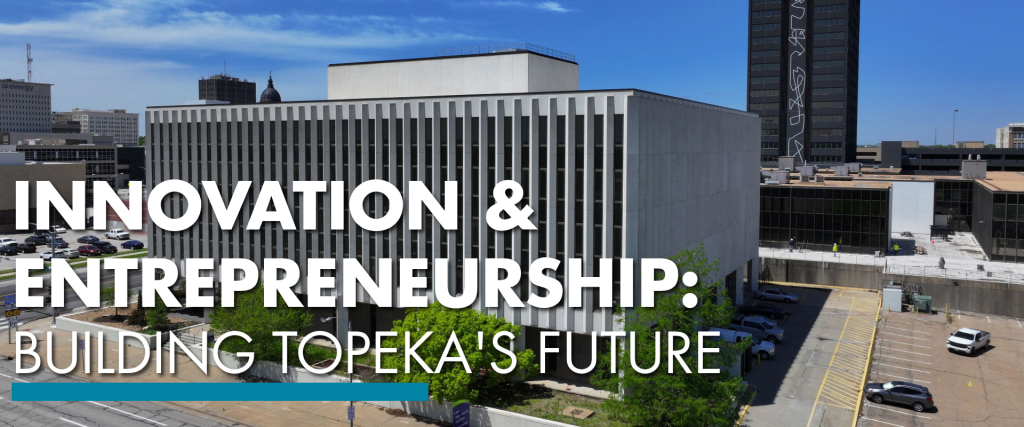



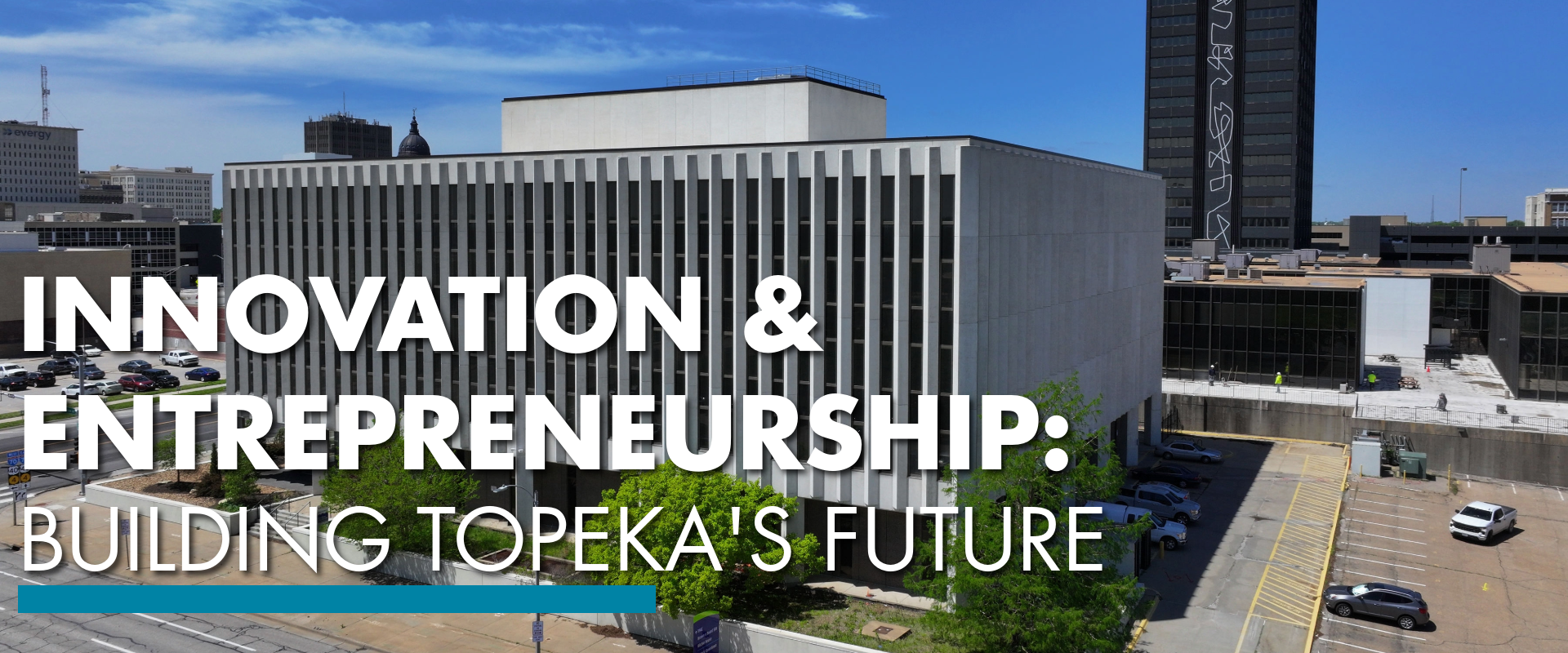
Topeka is poised for a new era of innovation and entrepreneurial growth, and at the center of this momentum is Link Innovation Labs, a $15 million, 18,000-square-foot hub set to open in January 2026. Developed by GO Topeka, this space is designed to accelerate startups from concept to commercialization, providing the infrastructure, partnerships, and resources needed to compete on a global scale.
WHAT MAKES LINK INNOVATION LABS DIFFERENT?
- Comprehensive Resources: Wet and dry labs, co-working spaces, private offices, conference rooms, and a coffee shop to foster collaboration and creativity.
• Global Reach: First tenant Plug and Play, a world-renowned startup accelerator, brings international visibility and connections to Topeka. - Community Collaboration: Built through partnerships with city and county leadership, higher education, and the private sector.
- Strategic Location: Situated in the heart of downtown Topeka, reimagining a former AT&T building into a center of economic energy.
WHY IT MATTERS NOW
The Kansas City Animal Health Corridor spans 10 Kansas counties and 28 communities, including Manhattan, Topeka, Lawrence, and the Kansas City metro. This corridor is the largest concentration of animal health assets in the world, representing a $21 billion industry. With this regional strength, Topeka is uniquely positioned to drive the next wave of bioscience and ag-tech innovation.
WHAT CONGRESS CAN DO
Congressional Directed Spending: We will be seeking Congressional Directed Spending in FY27 to ensure the successful build-out and launch of the Link Innovation Center. Key needs include: $2.5 million
- Lab Infrastructure: Casework and hoods for 8 labs – $1,825,288
- Additional Equipment: Specialized equipment to support bioscience and animal health research – $200,000
- Accelerator Programming: Support for Plug and Play’s Animal Health & Ag Tech Accelerator programs, as well as Plug and Play Digital Animal Health in conjunction with KC Digital Health (human health) – $500,000 for programming support.
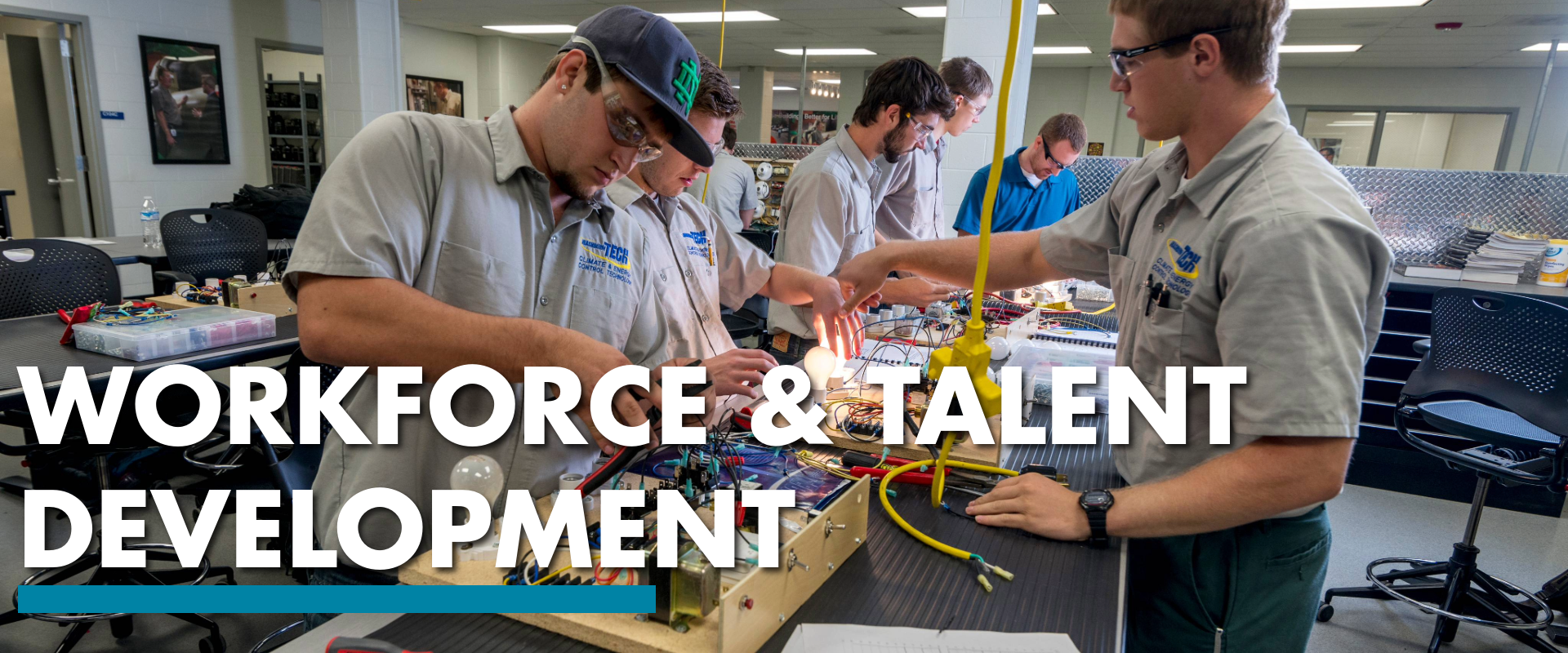
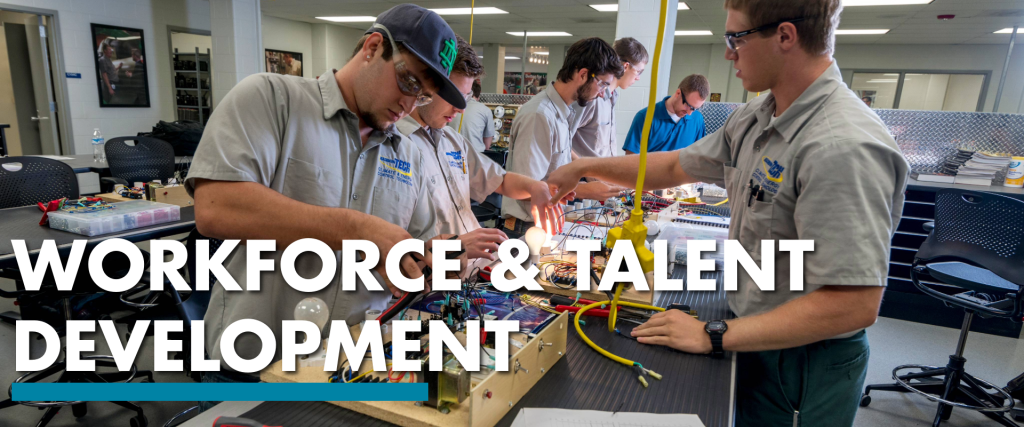
Topeka’s economy is growing rapidly, Shawnee County’s real GDP has risen 6.4% since 2019. To sustain this growth, we must ensure employers have access to a steady, skilled workforce:
SKILLED TRADE TRAINING: Research indicates that nearly 50% of all economic growth in Kansas will be in the manufacturing sector. This surge is increasing enrollment in technical and vocational schools as more students seek practical, hands-on education that leads directly to well-paying jobs. As the U.S. workforce ages and fewer young Americans enter these fields, visa programs are critical to filling gaps and keeping Kansas competitive. At the same time, we must invest in growing our own talent through institutions like Washburn University and Washburn Tech
UNITED FOR UKRAINE PROGRAM: More than 200 Ukrainian refugees now live in Topeka, many employed by companies such as Frito Lay, demonstrating the value of efficient work authorization models to meet local workforce needs.
DEMAND FOR WORKER VISAS: Employers in Kansas and across the nation rely on both H-1B and H-2B visa programs to fill critical workforce gaps that sustain growth and competitiveness. The H-1B program, capped at just 65,000 visas annually plus 20,000 for U.S. graduate degree holders, supports high-skill roles that complement—not replace—American workers, with national wages averaging more than double the U.S. median. Locally, Stormont Vail Health, Topeka’s largest employer, depends on H-1B professionals who retain at a 95% rate, strengthening care delivery and expanding access. At the same time, demand for H-2B workers has surged 46% since 2018, with certified positions exceeding 215,000 in 2023. These essential workers bolster industries such as hospitality, construction, forestry, and landscaping, helping small and mid-sized markets like Topeka meet labor needs and drive economic vitality.
WHAT CONGRESS CAN DO
SUPPORT WASHBURN TECH ADVANCED MANUFACTURING TRAINING CENTER
We support the $1.95 million Congressionally Directed Spending request is pending for Washburn Tech. This funding would equip the Advanced Manufacturing Training Center to prepare students for high-demand technical careers, strengthening the regional workforce pipeline.
SUPPORT WORK AUTHORIZATION FOR UKRAINIAN REFUGEES
More than 200 Ukrainian refugees are currently working in Topeka through the U4U parolee temporary guest worker program. We urge Congress to support legislation such as S.696 and H.R.2118 – the Protecting Our Guests During Hostilities in Ukraine Act – which would grant U4U parolees temporary guest status and work authorization until conditions in Ukraine allow for safe return.
SUPPORT EXPANDED VISA ACCESS FOR KANSAS EMPLOYERS
We urge Congress to expand and protect access to both H-2B visas for seasonal and essential workers and H-1B visas for high-skill talent. Kansas employers across industries—including agriculture, construction, technology, engineering, and biosciences—depend on reliable access to these programs. Ensuring timely visa availability, predictable rules, and fair allocations will help small and mid-sized markets like Topeka attract and retain the workforce needed to sustain growth and competitiveness.

Topeka boasts a strong aviation and defense sector anchored by Forbes Field and the 190th Air Refueling Wing (ARW), one of only two Air National Guard units in Kansas. Nearly 3,000 active-duty men and women serve in Topeka, with close to 1,000 assigned to the 190th ARW. Their mission—flying the KC-135 Stratotanker—supports global aerial refueling operations critical to national security.
Forbes is also home to the Kansas National Guard’s new, consolidated Joint Force Headquarters, the Kansas Army National Guard headquarters, the company headquarters for the 1st Battalion, 108th Aviation Regiment and the Kansas Armed Forces Reserve Center.
Beyond defense, Forbes Field is a strategic economic asset. The Metropolitan Topeka Airport Authority (MTAA) is working to expand commercial and private aviation at the facility, which features a 12,803-foot primary runway and a 7,001-foot crosswind runway and 2.7 million square feet of apron space. These assets are maintained to high standards with FAA and Defense Department funding, creating a platform for future growth.
WHAT CONGRESS CAN DO
To strengthen this sector and advance Topeka’s position as a hub for aviation and defense:
INVEST IN INFRASTRUCTURE: Thank you to Sen. Moran for supporting a $6 million Congressionally Directed Spending (CDS) request to resurface the north apron. Continued investment in aviation infrastructure ensures Forbes Field remains missionready and competitive.
SUPPORT STRATEGIC PLANNING: Shawnee County will pursue a Compatible Use Grant through the Office of Local Defense Community Cooperation (OLDCC) to develop a comprehensive plan aligning infrastructure development with the long-term mission of the 190th ARW.
ADVOCATE FOR MISSION GROWTH: Continued congressional advocacy is critical to secure future missions, including the opportunity to host the next-generation KC-46A Pegasus refueling aircraft, strengthening Kansas’s role in national defense and local economic development.

Topeka is a national hub for the financial services sector, employing more than 7,000 professionals across insurance, investment, banking, fintech, and wealth management. Industry leaders such as Advisor’s Excel, Security Benefit, Magellan, Gradient, and Xinnia anchor this ecosystem, joined by key institutions like Federal Home Loan Bank of Topeka, Capitol Federal Savings Bank, CoreFirst Bank & Trust, Envista Credit Union, and a growing network of wealth advisory and financial technology firms. Together, these companies drive significant economic growth, attract capital, and provide high-wage careers. A recent study found that Advisor’s Excel and Security Benefit alone generate more than $1.4 billion annually in economic impact for Shawnee County, underscoring the sector’s critical role in fueling Topeka’s economic competitiveness and long-term vitality.
The health of the financial services industry also requires stability across related markets like property insurance. Recent natural disasters have brought property insurance to the forefront of national policy discussions, but challenges such as rising premiums, shrinking coverage, and insurer withdrawals from certain markets have been building for years. These trends are impacting Topeka businesses. For example, Chavez Restoration in Topeka faces higher costs and greater uncertainty as they work to help families and businesses recover from property damage.
WHAT CONGRESS CAN DO
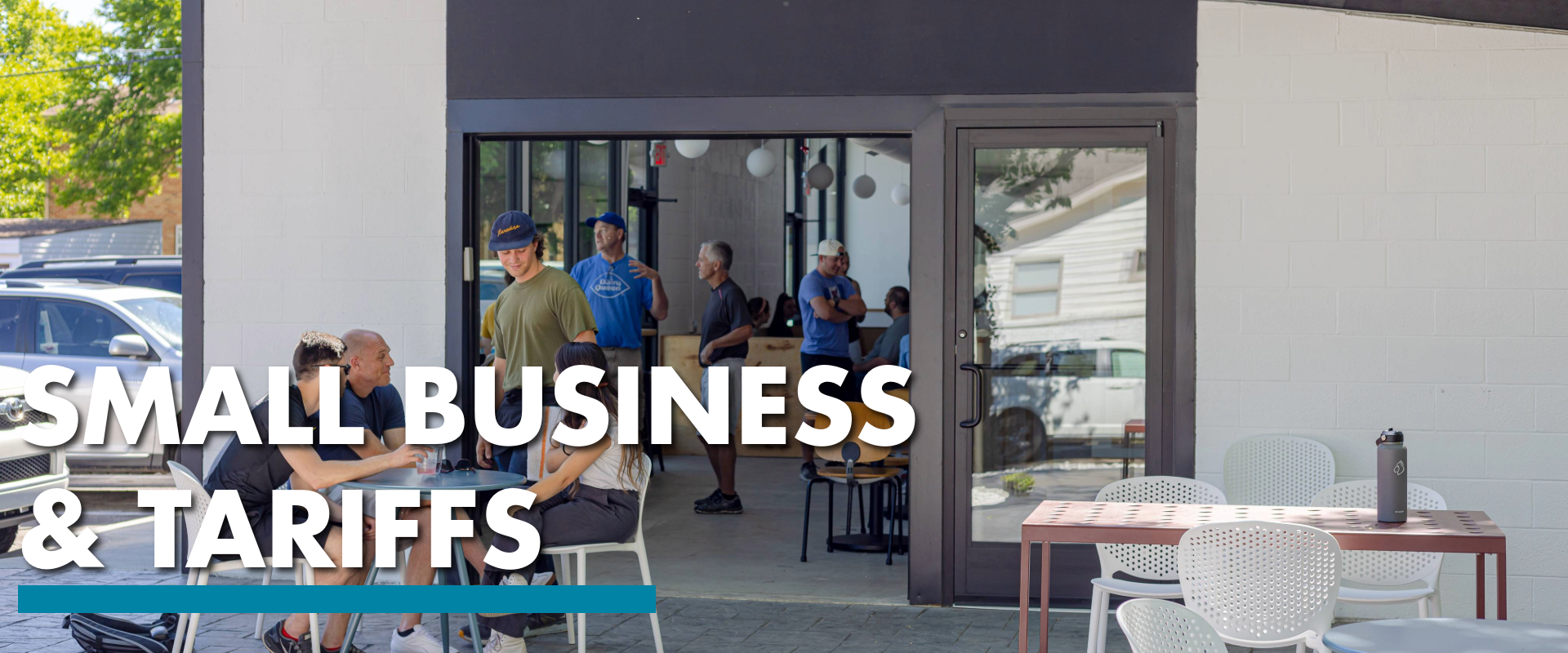
The Greater Topeka Chamber joins the U.S. Chamber of Commerce in opposing broad-based tariffs, which harm economic growth by raising prices for consumers, exposing American businesses to retaliation, and creating uncertainty. Small businesses in Topeka are already feeling these effects firsthand.
At Hazel Hill Chocolate, the cost of cacao—the raw ingredient, not the finished product—has risen more than 400% due to complex supply chain issues in West Africa, where most of the world’s cacao is produced. This surge has already driven retail chocolate prices up by about 38% industry-wide. On top of this challenge, cacao imported into the U.S. is now subject to an additional 10% U.S. tariff, further compounding costs. Of equal concern, European producers are avoiding this tariff by importing cacao into Canada or Mexico, processing it there into finished chocolate, and then shipping those goods into the U.S. duty free. This dynamic leaves American chocolate companies at a significant competitive disadvantage.
Other local businesses are navigating similar pressures. The Toy Store, with locations in Topeka and Lawrence, reports that 80% of its vendors are based in China and has resorted to bulk buying to manage price hikes. Dee & Mee Hobbies in Topeka has taken on an extra $50,000 in inventory to protect against further increases, highlighting the strain tariffs place on small retailers.
WHAT CONGRESS CAN DO
These examples illustrate how tariffs, layered on top of global market challenges, disproportionately impact small businesses. The Chamber strongly urges policymakers to pursue solutions that support fair trade, protect American competitiveness, and ease the burden on entrepreneurs working to grow their communities.
SUPPORT THE BIPARTISAN TRADE REVIEW ACT (S. 1272 AND H.R. 266): This legislation is co-sponsored by Senator Moran, and it will strengthen Congress’s role in tariff decisions to help prevent unintended economic impacts on local communities.
EASE TARIFF PRESSURES ON LOCAL BUSINESS: Support efforts to grant timely and fair tariff exemptions for small businesses. We thank Rep. Derek Schmidt for submitting a letter to U.S. Trade Representative Jamieson Greer in support of Hazel Hill Chocolate’s exemption request. His letter underscores that cacao cannot be grown domestically and must be imported. Without an exemption, U.S. chocolatiers face tariffs on raw cacao while European competitors can import cacao into Canada or Mexico, process it there, and then sell finished chocolate into the U.S. tariff-free under USMCA. We encourage continued support for similar exemption requests to help small businesses remain competitive, protect jobs, and keep consumer prices affordable.
REASSERT CONGRESSIONAL OVERSIGHT: Support the Bipartisan Trade Review Act (S.1272), cosponsored by Sen. Moran, to strengthen Congress’s role in tariff decisions and help prevent unintended economic impacts on local communities.

WHAT CONGRESS CAN DO
Immediate and Long-Term Funding Needs
Long-Term Vision: Pursue public-private partnerships and federal funding through agencies such as the Department of Transportation and the Build America Bureau to finance the pedestrian bridge and other major infrastructure components.
Support federal funding opportunities and earmarks to assist with river cleanup and infrastructure planning.
Advocate for transportation and economic development programs that prioritize riverfront redevelopment and community connectivity.
Partner with local leaders to ensure Topeka’s riverfront project aligns with state and federal priorities for tourism, recreation, and economic resilience.









Reimagining Topeka’s Riverfront – A Vision for the Future
Topeka stands at a pivotal moment in its development as a capital city. Despite the significant opportunity presented by the river running through our downtown, Topeka remains the only U.S. state capital with an underdeveloped riverfront. It is time to change that. Reimagining and reinvesting in our riverfront is essential to support Topeka’s economic growth and enhance our community’s quality of life.
Key Design Features of the Plan:
Levee and Flood Wall Enhancements: Modifying the flyway, expanding the top of the levee to meet buildings and roadways, and adding a new gate for north access will integrate the levee into the urban fabric.
Pedestrian Bridge: The proposed 1,100-foot pedestrian bridge will feature sculptural arches and be architecturally significant, providing a direct and inspiring connection between downtown Topeka and the NoTo Arts District. The design draws inspiration from our local history and environment, including the braided river, covered wagons, and native wildlife.
Water Access Points: Developing active and informal water access points on both the north and south sides of the river will enhance recreational opportunities and create new ways to enjoy the riverfront.
Play and Programming Areas: Creating nature-based play spaces, a water plaza, and a stream feature will provide unique and engaging experiences for families and visitors.
Art and Culture Incorporation: The plan includes educational panels and culturally significant artworks to celebrate Topeka’s heritage and educate visitors on the river’s historical context.
A Bridge to our Future:
The new pedestrian bridge, approximately located where the Oregon Trail once crossed the Kansas River, aligns with the Kansas State Capitol to the south and the Great Overland Station to the north. This bridge will offer a safe and inspired connection between downtown Topeka and NoTo while honoring the area’s history, geography, and natural environment.
Now is the time for Topeka to seize the opportunity to transform our riverfront into a dynamic, inviting, and economically vibrant area. With strong collaboration among business leaders, community members, and local government, we can achieve a riverfront that fosters connection, celebrates our history, and drives future growth.
Let’s reimagine our riverfront and take the next step in building a brighter future for Topeka.
Urgent Need for Improved Safety and Access on the Kansas Turnpike in Shawnee County
The Kansas Turnpike Authority (KTA) currently operates two interchanges in Shawnee County: one in south Topeka and the other just east of Topeka. However, a critical safety and access gap exists between these interchanges, which presents a significant concern for motorists and the community.
Current Challenges:
Limited Access: The distance between the south Topeka exit at mile marker 177 and the next-closest exit to the southwest, at mile marker 147 near Admire, is 30 miles. This creates a 60-mile round trip for motorists who mistakenly enter the turnpike heading southwest instead of east, just to return to Topeka.
Safety Hazards: Without a nearby exit, motorists often resort to making dangerous, illegal U-turns through the median. This issue tragically resulted in the deaths of three Topeka children in October, when a semi-trailer struck a van attempting such a maneuver five miles southwest of the south Topeka interchange.
KTA’s Priority Criteria:
The Kansas Turnpike Authority utilizes three main components to determine project priorities: safety, customer service, and business need. The current configuration between these interchanges fails to meet the standards of safety and customer service that KTA aims to uphold.
Funding Opportunities and Limitations:
While Kansas has secured $1.5 billion in federal bipartisan infrastructure funding, with more anticipated in coming years, there are challenges in applying these funds to the Kansas Turnpike. The Federal Highway Administration indicates that using federal funds for Kansas Turnpike projects would likely federalize the turnpike system. Federalizing would require KTA to close service areas, adhere to additional federal guidelines, and impact KDOT’s toll credits, which is a step the KTA is unwilling to take.
Call to Action:
The Greater Topeka Chamber of Commerce is committed to finding a solution to this critical infrastructure need. We call upon stakeholders, including the Kansas Turnpike Authority, state and federal lawmakers, and community leaders, to prioritize the safety and accessibility of the Kansas Turnpike in Shawnee County. Together, we must explore creative funding solutions and legislative pathways that ensure no more lives are lost due to dangerous and avoidable circumstances.
This is a matter of public safety, customer service, and community wellbeing. It is time to act now.
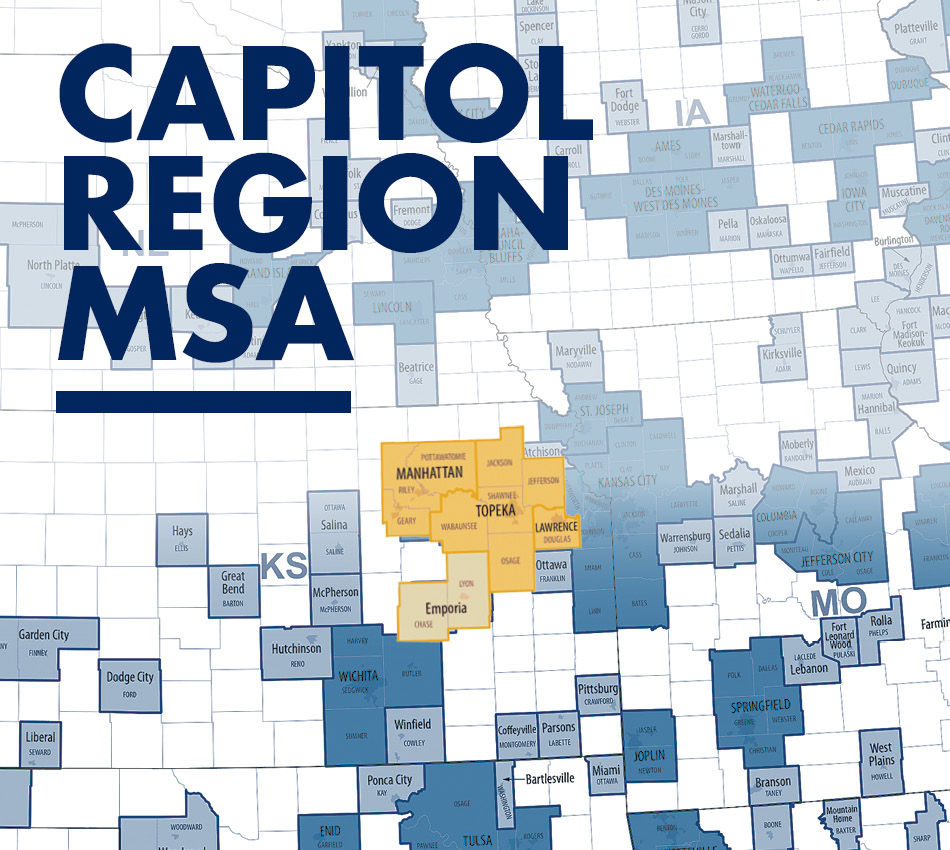
UNLOCKING ECONOMIC DEVELOPMENT BY CREATING TOPEKA-LAWRENCE-MANHATTAN METROPOLITAN STATISTICAL AREA
A well-defined and representative Metropolitan Statistical Area (MSA) is vital to advancing economic development and talent attraction efforts. An MSA serves as a key indicator of regional economic activity, population density, and workforce potential, providing a clearer picture to businesses and talent looking to invest or relocate.
Currently, the Topeka, KS MSA does not effectively capture the true size and synergy of the Capitol Region economy. The neighboring MSAs—
Manhattan, Emporia, Lawrence, and Topeka— operate as separate entities, underplaying the economic strength and regional collaboration that already exists. To maximize economic development opportunities and showcase the true scope of this dynamic area, merging these MSAs into a united Capitol Region MSA would be a critical step.
CURRENT MSA BREAKDOWN:
1. TOPEKA MSA – Approx. 235,000 residents
$14.4B (2022) 5 counties
2. MANHATTAN MSA – Approx. 135,000 residents
$8.5B (2022) 3 counties
3. LAWRENCE MSA – Approx. 120,000 residents
$6.2B (2022) 1 county
4. EMPORIA MSA – Approx. 36,000 residents
$1.7B (Lyon) $156M (Chase) 2 county micropolitan
COMBINED POPULATION OF THE UNITED MSA:
526,000+ residents $30.9B GDP, 11 counties
A united MSA would significantly improve the regional profile, representing more accurately the size, demographics, and economic GDP of the Capitol Region. This larger MSA would make the region more attractive to businesses, investors, and talent looking for strong economic potential,
cultural amenities, and a growing workforce.
COMPARISON WITH OTHER MAJOR METROPOLITAN STATISTICAL AREAS:
$169.5B (2022) 14 Counties
$25.5B (2022) 3 counties

Opposition to the Department of Labor’s New Overtime Rules
The Department of Labor (DOL) is set to implement new overtime rules on January 1, 2025, which will significantly impact employers and business owners across the country. Under these new regulations, the minimum salary threshold for overtime pay from $43,888, enacted on July 1, 2024, to $58,656 on January 1, 2025. As these changes occur, job duties will continue to determine overtime exemption status for most salaried employees. The rule will also increase the total annual compensation requirement for highly compensated employees (who are not entitled to overtime pay under the FLSA if certain requirements are met) from $107,432 per year to $151,164 per year on Jan. 1, 2025.
These changes will place undue financial and operational burdens on businesses, particularly small to mid-sized companies. Employers will face increased labor costs as more workers become eligible for overtime pay, forcing many businesses to re-evaluate their staffing levels, schedules, and overall compensation strategies.
Legal Challenge Pending:
State of Texas, Plano Chamber of Commerce, et al. v. U.S. Department of Labor, pending in the Eastern District of Texas, no additional plaintiffs have filed a motion seeking a nationwide preliminary injunction.
On June 28, 2024, Eastern District of Texas Judge Sean D. Jordan enjoined the DOL’s 2024 Salary Rule on Texas’s motion for preliminary injunction, but stopped short of issuing a nationwide injunction that would also apply to private employers.
Why we oppose this regulation:
•The rule places more emphasis on salary than on the duties performed.
•The DOL’s authority to automatically update the threshold every three years without a separate notice of proposed rulemaking.
•The DOL does not have the authority to raise the salary threshold or issue a salary level test.
•The rule hurts small businesses.
While the intention behind the new overtime rules is to protect workers and increase earnings for many, the negative impact on business owners, particularly small and medium-sized enterprises, is clear. Rising labor costs, increased administrative complexity, and greater legal exposure threaten the stability and profitability of businesses across sectors. We urge policymakers to reconsider these changes and work towards a solution that balances the needs of workers with the economic realities faced by employers.

Support H.R. 7380 – The PURR Act of 2024
We express strong support for H.R. 7380, the Pet Food Uniform Regulatory Reform (PURR) Act of 2024, introduced in the U.S. House of Representatives. This bipartisan legislation will streamline the regulatory process for pet food and treats by placing ingredient review and labeling oversight under the U.S. Food and Drug Administration (FDA). The current state-by-state approach is outdated and inconsistent, creating unnecessary burdens on pet food manufacturers, stifling innovation, and leading to regulatory confusion. The PURR Act offers a modernized, unified federal framework that will benefit consumers, producers, and pets alike.
Benefits of the PURR Act
The PURR Act will modernize pet food regulation by giving the FDA authority over the review and approval of pet food ingredients and labeling. This change will eliminate the fragmented state-by-state system currently in place, reducing red tape and helping pet food manufacturers operate more efficiently. With the FDA providing oversight, pet owners can trust that their pets’ food is safe, while manufacturers will benefit from a streamlined approval process, freeing up resources for research and development of new and improved products.
Bipartisan Support for American Agriculture
The PURR Act enjoys bipartisan support from Representatives Jake LaTurner (R-Kan.), Henry Cuellar (D-Texas), Sharice Davids (D-Kan.), Josh Harder (D-Calif.), and Steve Womack (R-Ark.). This broad backing reflects the legislation’s importance to both the pet food industry and the broader agricultural community. As Rep. LaTurner noted, “Pet food makers produce nearly 10 million tons of food annually and are crucial to American agriculture.” The PURR Act will reduce the regulatory costs that have made it difficult for these manufacturers to invest in innovation, ensuring the industry remains competitive and responsive to consumer needs.
A Streamlined Future for Pet Food Regulation
By shifting regulatory authority to the FDA, the PURR Act will create a clear, consistent framework for pet food producers. This will help businesses avoid the costly and time-consuming process of navigating a patchwork of state regulations, ensuring that products meet uniform safety and quality standards. As a result, consumers can feel confident that the pet food they purchase is subject to the same stringent standards across the country, protecting the health and well-being of their pets.
The PURR Act of 2024 is a critical step in modernizing how pet food is regulated in the U.S. This legislation will reduce regulatory burdens, promote innovation, and strengthen the overall safety of pet food products, benefiting manufacturers, consumers, and pets. We urge Congress to swiftly pass H.R. 7380 and support this important reform, ensuring that pet food makers and American agriculture continue to thrive.

Support for Extending the Tax Cuts and Jobs Act (TCJA) Provisions:
Safeguarding American Jobs and Growth
Nearly seven years have passed since the landmark Tax Cuts and Jobs Act (TCJA) transformed the U.S. tax code. As the most sweeping tax reform since 1986, the TCJA modernized our approach to business taxation, particularly in cross-border transactions. However, many of the TCJA’s critical reforms for individuals, businesses, and estates were enacted on a temporary basis and are set to expire at the end of 2025. Failure to extend these provisions would have far-reaching negative effects on American businesses and families.
Key Business Tax Provisions at Risk
Thanks to the U.S. Chamber of Commerce’s advocacy, the House of Representatives recently passed legislation to restore and extend three essential TCJA business tax reforms that have already expired or begun to phase down:
– The deduction for domestic research and development (R&D) expenses
– The EBITDA standard for deducting business interest expenses
– 100% bonus depreciation
As these reforms await Senate approval, America’s businesses, especially small and mid-sized employers, are feeling the pressure. Many have been forced to take on high-interest loans, raise prices, cut back operations, or lay off workers—all to meet their tax obligations. Inaction is already costing jobs and investment in our communities.
What’s at Stake in 2025
If Congress does not act, the end of 2025 will see the expiration of many more TCJA provisions, threatening both individuals and businesses of all sizes. The consequences will be amplified by the simultaneous expiration of other key temporary tax provisions, such as the expanded premium tax credits* for health insurance, the new markets tax credit, and the work opportunity tax credit.
Our Call to Action
We urge Congress to extend these essential tax provisions and continue fostering an environment where American businesses can thrive. With these extensions, we can protect jobs, promote innovation, and safeguard economic growth for all Americans. Let’s ensure that the progress made under the TCJA continues to benefit families, workers, and businesses alike.

Advocacy for Immigration Reform: A Call for Congressional Action
In February 2024, the U.S. Chamber of Commerce supported a bipartisan immigration and defense deal aimed at addressing the ongoing U.S.–Mexico border crisis. Unfortunately, the deal was not signed into law, leaving critical issues unresolved. Immigration reform is essential to protect American economic interests, reduce human suffering, and secure orderly migration across the border.
Improve Workforce Pipeline
Immigrants make up over 19% of the US workforce as of June 2024 — over 32 million out of a total of 169 million — and participate in the labor force at a higher rate than native-born workers, according to data from the Bureau of Labor Statistics (BLS). In 2022 The US Chamber of Commerce called for doubling the number of legal immigrants into America as a way to ease inflation and the worker shortage. “We need more workers. We should welcome people who want to come here, go to school and stay,” Chamber of Commerce CEO Suzanne Clark
Economic Disruption from the Border Crisis
The economic toll from the border crisis is substantial. American businesses are struggling
with closures and restrictions on crossings, severely disrupting trade. For example, the closure of Eagle Pass last fall cost an estimated $2.32 million per day. Local economies and businesses are also suffering from long delays at border crossings and increased housing and healthcare costs in border regions. Without immediate action, the economic damage will worsen.
Inhumane Immigration Practices
The human suffering associated with the border crisis is staggering. Immigrant women and children endure widespread violence, including rape and sexual assault. Every year, immigrants die while attempting dangerous crossings. These tragedies are driven by outdated asylum laws and insufficient border security. Addressing these issues is crucial to prevent further human suffering.
The Fentanyl Crisis
The border crisis has also fueled the fentanyl epidemic, with over 73,000 overdose deaths in 2022 alone. Most fentanyl is smuggled through the southern border, and without better security, this deadly drug will continue to flood into the U.S., claiming more lives.
Conclusion: The Need for Congressional Action
The border crisis is unsustainable, causing immense disruption to the economy and to human lives. Congress must act now to implement comprehensive immigration reform. The business community stands ready to support legislative solutions that will help American businesses, workers, and families. The time for action is now.
Addressing the Growing Crisis of Homelessness in the United States
Homelessness continues to be a major social and economic issue in the United States, with communities across the country struggling to address the growing needs of individuals and families experiencing housing instability. In 2024, the situation has become more pressing than ever, with cities and counties facing increasing numbers of homeless individuals, a lack of affordable housing, and insufficient resources to meet the rising demand for services.
Homelessness in Topeka and Shawnee County
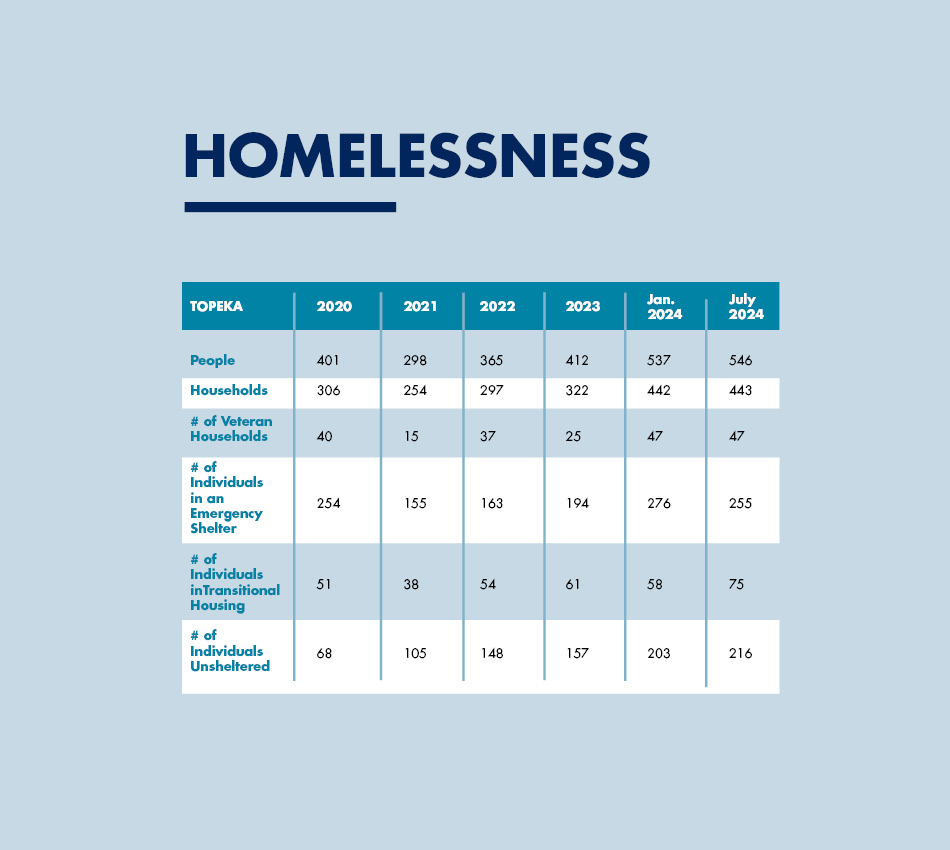
As of July 2024, the count of individuals experiencing homelessness in Topeka and Shawnee County has risen to 546 people, including 433 households. This is a significant increase from 2020, when 400 individuals were reported as homeless. The data also revealed 59% of those experiencing homelessness are male, while 40% are female. 216 of these individuals are unsheltered, meaning they are not living in emergency shelters or transitional housing but are instead on the streets, in cars, or other places not meant for habitation.
Why Homelessness is a National Problem
Homelessness is not just a local issue but a national crisis that requires immediate attention and action from all levels of government. Rising housing costs, wage stagnation, mental health challenges, and the effects of the COVID-19 pandemic have all contributed to the growing numbers of people experiencing homelessness. Communities like Topeka and Shawnee County are feeling the strain of trying to meet these needs without sufficient resources or infrastructure in place.
This problem has far-reaching impacts on individuals, families, and communities. Homelessness affects health, safety, and economic stability. Individuals experiencing homelessness are at higher risk for chronic health conditions, substance abuse, and mental health disorders, while families may be torn apart as they struggle to find stable housing. At the community level, homelessness can strain public services, increase crime rates, and reduce the overall quality of life for residents.
The Need for Increased Federal Funding
To effectively combat homelessness, more federal funding is urgently needed to support local governments and non-profit organizations that are on the front lines of this crisis. Additional resources are essential for expanding affordable housing options, strengthening emergency shelter systems, and providing mental health and substance abuse services.
Conclusion
Homelessness is a growing crisis in the United States, with communities like Topeka and Shawnee County experiencing dramatic increases in the number of individuals and families living without stable housing. The situation calls for immediate action and a strong commitment from federal policymakers to provide the funding necessary to address the root causes of homelessness and support local communities in their efforts to provide shelter and services.
Additional Reading - CARB Regulation
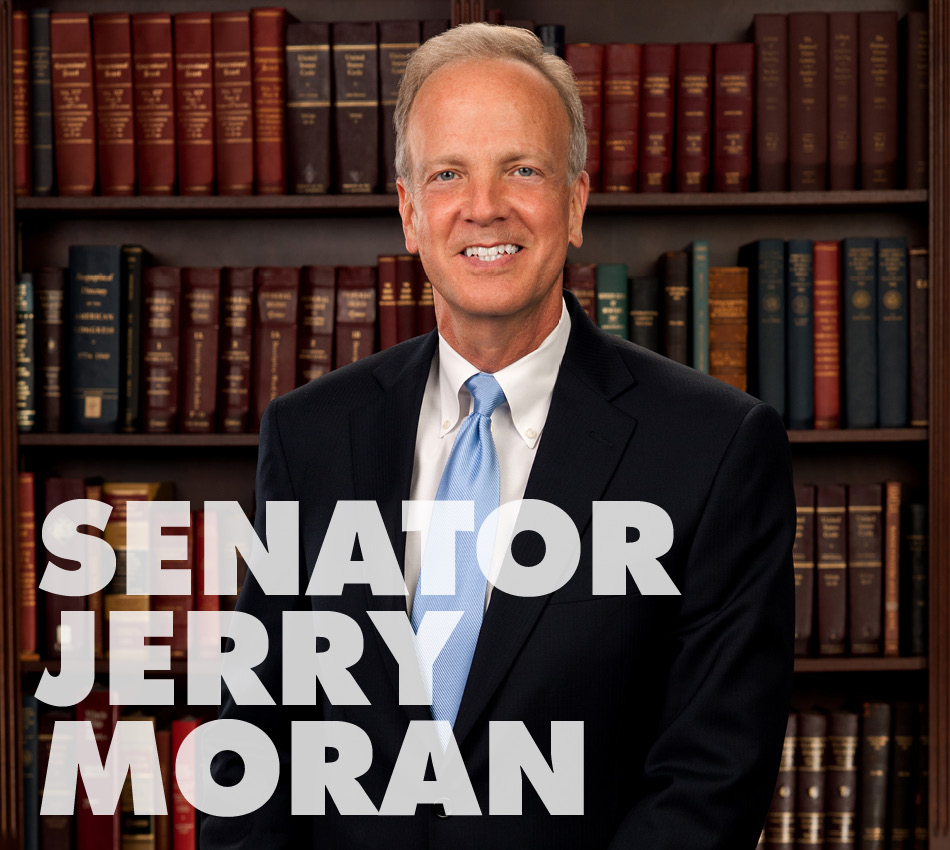
Jerry Moran attended Fort Hays State University and later the University of Kansas, where he completed a degree in economics, Jerry began as a small-town banker before earning his J.D. from the University of Kansas. While Jerry enjoyed serving his community as a small-town banker, he felt called to give back even more. In 1989, Jerry ran for Kansas State Senate and won. He served in the State Senate for eight years, serving the last two years as Majority Leader, and fought to protect our conservative values – protecting the Constitution, standing for life, strengthening the economy, and providing more resources for our agriculture industry. In 2010, Kansans elected Jerry to serve in the United States Senate – following in the footsteps of his mentor and good friend, Senator Bob Dole. In 2014, Jerry served as chairman of the National Republican Senatorial Committee (NRSC).
Committees
Appropriations Committee
Commerce, Science and Transportation Committee
Intelligence Committee
Ranking Member – Veterans’ Affairs Committee
Location
Dirksen Senate Office Building, #521
Washington, DC 20510
202.224.6521
Topics
Riverfront Funding
Transportation Infrastructure Dollars
Immigration Reform
Tax Cuts and Jobs Act Renewal
PURR Act – Pet Food Regulations
Jerry Moran attended Fort Hays State University and later the University of Kansas, where he completed a degree in economics, Jerry began as a small-town banker before earning his J.D. from the University of Kansas. While Jerry enjoyed serving his community as a small-town banker, he felt called to give back even more. In 1989, Jerry ran for Kansas State Senate and won. He served in the State Senate for eight years, serving the last two years as Majority Leader, and fought to protect our conservative values – protecting the Constitution, standing for life, strengthening the economy, and providing more resources for our agriculture industry. In 2010, Kansans elected Jerry to serve in the United States Senate – following in the footsteps of his mentor and good friend, Senator Bob Dole. In 2014, Jerry served as chairman of the National Republican Senatorial Committee (NRSC).
Committees
Appropriations Committee
Commerce, Science and Transportation Committee
Intelligence Committee
Ranking Member – Veterans’ Affairs Committee
Location
Dirksen Senate Office Building, #521
Washington, DC 20510
202.224.6521
Topics
Riverfront Funding
Transportation Infrastructure Dollars
Immigration Reform
Tax Cuts and Jobs Act Renewal
PURR Act – Pet Food Regulations
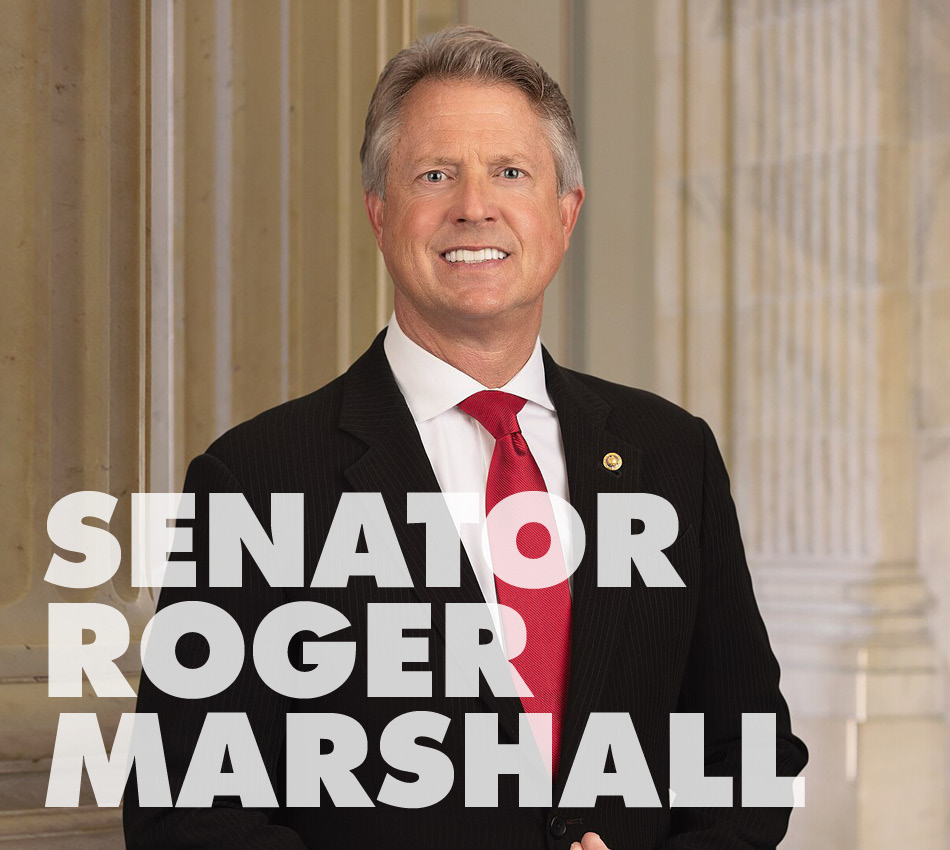
Marshall is a physician, devoted father, grandfather, and U.S. Senator for Kansas. As a 5th generation farm kid growing up in Butler County, Doc Marshall became the first in his family to attend college. After graduating from Butler County Community College, he received his Bachelor’s degree from Kansas State University and his Medical Doctorate from the University of Kansas. Marshall practiced medicine in Great Bend for more than 25 years and served in the Army Reserves for seven years. As an OB/GYN, he delivered more than 5,000 babies, giving him a deep appreciation and passion for the sanctity of life and an intimate understanding of the healthcare system. During his time in medicine, Doc Marshall was more than a physician. For 25 years, he was a business owner who signed a paycheck every other week for a practice that grew from 5 people to eventually more than 300.
Committees
Committee on Agriculture, Nutrition, and Forestry
Ranking Member on the Subcommittee on Conservation, Climate, Forestry, and Natural Resources
Subcommittee on Food and Nutrition, Specialty Crops, Organics, and Research
Subcommittee on Livestock, Dairy Poultry, Local Food Systems, and Food Safety and Security
Committee on Health, Education, Labor, and Pensions
Subcommittee on Employment and Workforce Safety
Ranking Member on the Subcommittee on Primary Health and Retirement Security
Committee on Homeland Security and Governmental Affairs Permanent Subcommittee on Investigations
Committee on the Budget
Location
479A Russell Senate Office Building
Washington, D.C. 20510
202.224.4774
Topics
Riverfront Funding
Transportation Infrastructure Dollars
Immigration Reform
Tax Cuts and Jobs Act Renewal
PURR Act – Pet Food Regulations
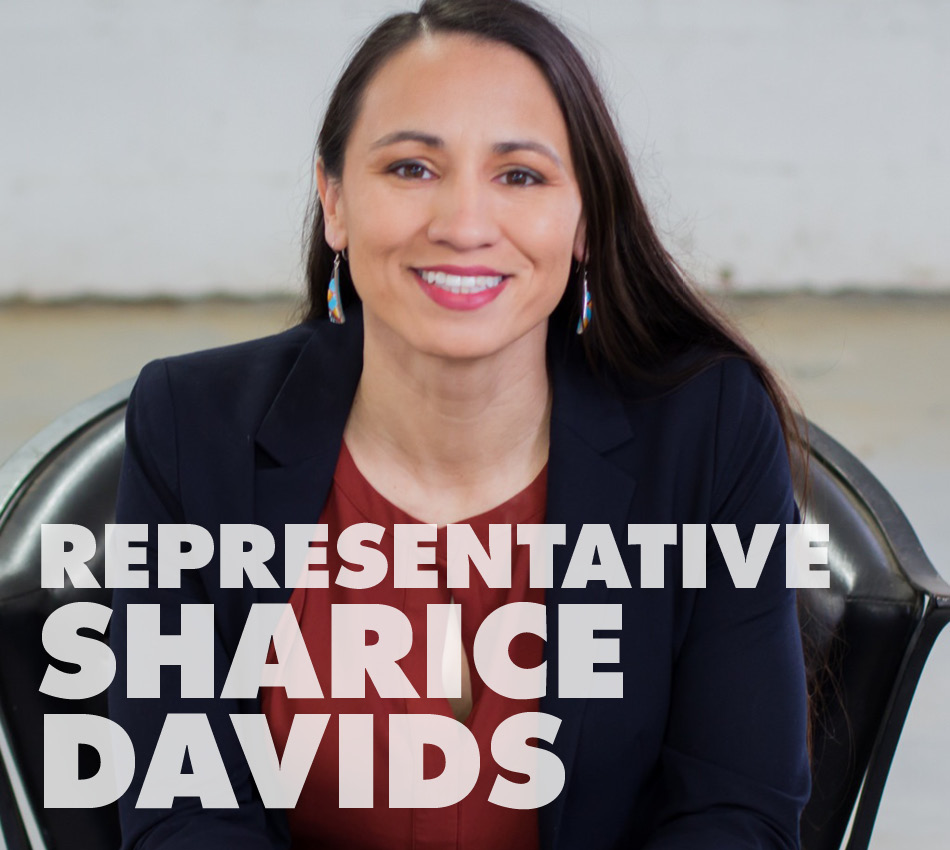
Representative Davids was raised by a single mother, who served in the Army for 20 years. After graduating from Leavenworth High School, she worked her way through Johnson County Community College and the University of Missouri-Kansas City before earning a law degree from Cornell Law School. As a first generation college student who worked the entire time she was in college, Rep. Davids understands the importance of quality public schools and affordable higher education. It is that foundation that allowed her to go on to a successful career, focused on economic and community development, which included time as a White House Fellow under President Barack Obama. When she was sworn into the 116th Congress, Rep. Davids became one of the first two Native American women to serve in Congress.
Committees
Committee on Transportation and Infrastructure
Subcommittee on Aviation
Subcommittee on Economic Development, Public Buildings, and Emergency Management
Committee on Small Business
Subcommittee on Economic Growth, Tax and Capital Access
Committee on Agriculture
Subcommittee on General Farm Commodities, Risk Management, and Credit
Location
2435 Rayburn House Office Building
Washington, DC 20515
202.225.2865
Topics
Riverfront Funding
Transportation Infrastructure Dollars
Immigration Reform
Tax Cuts and Jobs Act Renewal
PURR Act – Pet Food Regulations
Representative Davids was raised by a single mother, who served in the Army for 20 years. After graduating from Leavenworth High School, she worked her way through Johnson County Community College and the University of Missouri-Kansas City before earning a law degree from Cornell Law School. As a first generation college student who worked the entire time she was in college, Rep. Davids understands the importance of quality public schools and affordable higher education. It is that foundation that allowed her to go on to a successful career, focused on economic and community development, which included time as a White House Fellow under President Barack Obama. When she was sworn into the 116th Congress, Rep. Davids became one of the first two Native American women to serve in Congress.
Committees
Committee on Transportation and Infrastructure
Subcommittee on Aviation
Subcommittee on Economic Development, Public Buildings, and Emergency Management
Committee on Small Business
Subcommittee on Economic Growth, Tax and Capital Access
Committee on Agriculture
Subcommittee on General Farm Commodities, Risk Management, and Credit
Location
2435 Rayburn House Office Building
Washington, DC 20515
202.225.2865
Topics
Riverfront Funding
Transportation Infrastructure Dollars
Immigration Reform
Tax Cuts and Jobs Act Renewal
PURR Act – Pet Food Regulations

Guests will enjoy dinner at two popular Washington, D.C., restaurants, including La Bise—a Michelin-starred venue adjacent to the White House. This bright and colorful restaurant brings French cuisine into the 21st century.
1789, the quintessential Washington DC fine dining experience. Guests will
enjoy dining in an historic Federal townhouse that stretches across three floors.

Guests of the 2024 DC Fly In will stay at the historic Hotel W. Located near the White House, it features elegant rooms with stunning city views, a rooftop bar, and the renowned Sky Room for events. Guests enjoy convenient access to
landmarks like the National Mall and Smithsonian museums. The hotel blends classic architecture with contemporary amenities, providing exceptional dining,
a full-service spa, and state-of-the-art fitness facilities.